The presence of a terrace or a balcony well designed at a landscape level can represent an element that gives high added value to a living space improving it with significant benefits such as the reduction of the heat island effect or an increase in mental well-being for the user as a refuge from urban stress; let’s try to make it as welcoming as possible with some advice and suggestions.
1. Exposure and size
2. Focal points and privacy
3. Plant species
4. Furniture and flooring
5. Irrigation and lighting
Exposure and size
The first phase of planning and design part from the knowledge of the exposure of our terrace to allow us to understand how to divide the spaces and which botanical species to choose since there are plants that are more suited to the shade and others that express better flowering and vegetative growth in full sun. Flowers play a primary role in the design of greenery to increase its charm, so let’s not underestimate the exposure aspect! Another important consideration is the size and shape of your outdoor space, before proceeding with purchases and installations we measure the available area and with the help of an expert in the sector we draw the floor plan understanding how to make the most of the available surface by coherently organizing volumes, plants and furnishings. If your terrace is large enough create a multifunctional place with a relaxation area and, if possible, a pergola.
Focal points and privacy
We observe what surrounds us and identify one or more corners that attract our vision, enhancing them with elements such as a single vase or a group of designer vases but also a sculpture that has a particular meaning for us or, if possible, a small fountain with relaxing water features. We then pay attention to the external perspective views to be enhanced leaving an open view or, if possible, hiding it to create greater privacy using trellises or planters with aluminium or wooden grills to be decorated with climbing plants such as re-flowering roses.
Plant species
On a terracePlants play a primary role in increasing the sense of well-being and improving the quality of life. We therefore create a splendid outdoor living space by carefully choosing the most suitable plant species, considering aspects such as the space available, the climate, the exposure, the final size reached at maturity, the bearing, the chromatic tone of the flowers. We use small tricks based on chromatic balance in the case of mixed compositions, repetition to create visual uniformity and cohesion, the creation of focal groups.
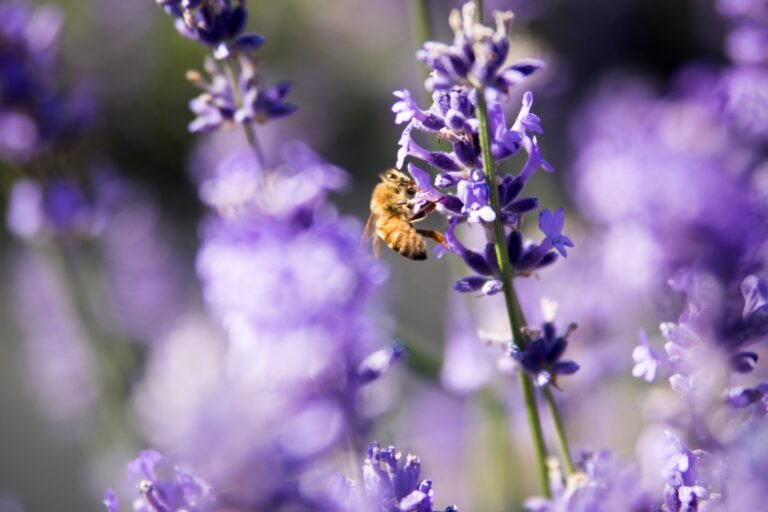
Depending on the size of your space, you can opt for perennial herbaceous plants, long-flowering annuals, seasonal bulbs, but also small shrubs, aromatic plants, small fruits and, if you are a gardening enthusiast, don’t forget vegetables! We give a unique accent by choosing some species with scented inflorescences that are well-liked by pollinating insects such as bees and butterflies.
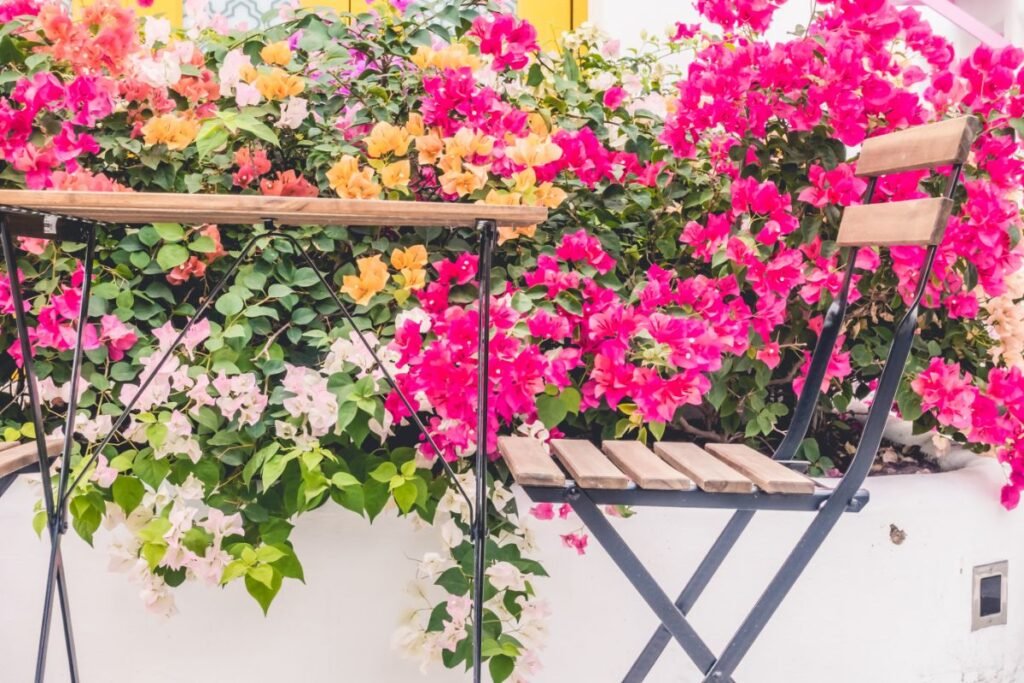
If we prefer to create combinations between several plants, let’s remember to arrange them in bands in relation to their height and their vegetative growth, furthermoreLet’s think about all the seasons, identifying those species that can give an accent of color with flowers or foliage even during the coldest periods. If you live in areas with very hot summers and your terrace faces south, opt for varieties with dense and abundant foliage that can create shade during the sunniest hours. Let’s also remember touse specific substrate for ornamentals or for horticultural species by carrying out routine maintenance checks to also verify the health of your plants.
Furniture and flooring
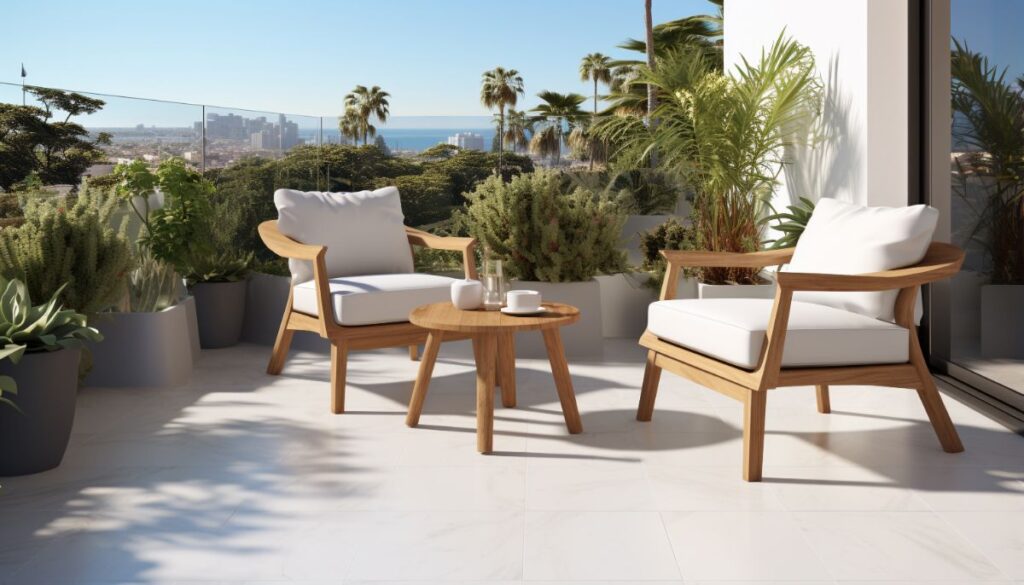
We complete the project with specific outdoor furnishing elements, to be chosen based on the final occupied space and your personal tastes considering the architectural style of the house and completing them with cushions and design elements.
For vases and flowerpots we have a wide range of choices, we try not to insert styles that are too different from each other so as not to generate a situation of visual disorder but by finding a connection between the individual elements, we can for example opt for groups of vases of different heights to create movement and perspective depth. Hanging or suspended vases are also decorative, as are those mounted on the wall in modules that can act as a vertical green wall to make the most of all the available space.
If we then had a suitable overall surface area we could have treated wooden seats made that would simultaneously function as raised flower beds in the rear part to develop the terrace on two levels.
For flooring, where possible, we can opt for natural materials such as stone, terracotta or wood, suitably treated to resist bad weather and to be non-slip; the light colour reflects light and can make your terrace appear optically more spacious than dark flooring.
Irrigation and lighting
To ensure an adequate water supply to your plants, especially during the hottest periods, have an automatic irrigation system with programmable control unit, very useful even when you go on holiday!
Let’s add a note of atmosphere by placing external lights in strategic points, for example lanterns, hanging lamps or even a designer chandelier to create an intimate and welcoming atmosphere, especially in the evening. You can also enhance an architectural element such as a sculpture or a group of vases with plants acting as a focal point using diffused light spotlights.
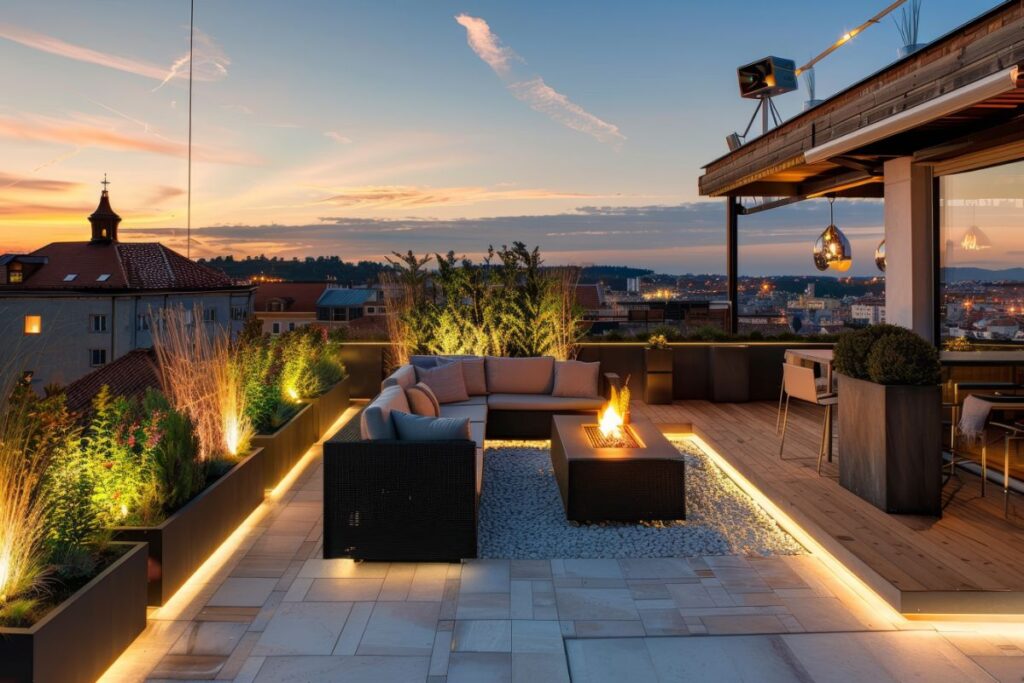
No matter what the size of your terrace is, the important thing is to follow some design and maintenance rules to create a welcoming and elegant outdoor environment all year round.