In flowerbeds as well as in planters it is possible to create mixed compositionscombining ornamental herbaceous plants of different heights, with inflorescences and foliage of variable chromatic tones or shades obtaining elegant and scenographic results. We can create harmonious ensembles by combining relaxing pastel shades where each color has the same weight without dominating the others or by grouping bright and saturated colors according to cohesive designs or schemes following personal imagination. To avoid obtaining inhomogeneous and visually inharmonious results we must take into consideration some aspects related to the same plant species that we intend to use, in particular:
1. Vegetative vigor and bearing
2. Height
3. Environmental conditions and growth needs
4. Color combinations
5. Flowering and seasonality
6. Insect friendly
7. Perfume
Vegetative vigor and bearing
We try not to use plants that have different growth rates, to avoid that some of them may prevail over the others, compromising their growth and the final result; furthermore, we inform ourselves in advance about the bearing of each individual species which may be prostrate, erect or climbing, setting up a compositional project with a compact structure, for example by associating Asteriscus maritimus with Salvia farinacea and Lantana camara, or Alchemilla mollis with Astilbe chinensis, Bergenia cordifolia and Bergenia purpurescens.
Let us remember, during the transplant phase, leave each specimen the right amount of space to grow according to an appropriate planting density, helping to obtain a sense of fullness free from overcrowding. To initially make our garden take on a more luxuriant appearance, we can also fill any empty spaces with annual plants until the perennials reach their final growth dimensions.
Height
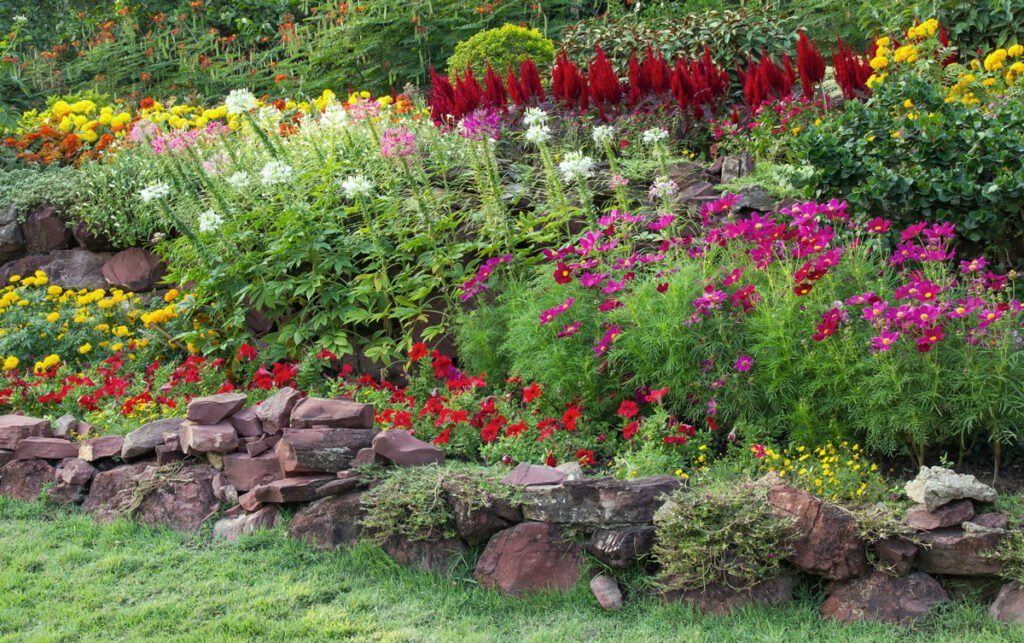
In relation to the final effect we want to create, we opt for combinations of species or varieties of different heights reached at maturity, arranging them according to bands or levels in order to obtain graceful and sinuous perspective views without any of the plants present being hidden by others. We choose one or two species that can act as a colored focal point, thus attracting visual attention and providing balance, such as Alcea rosea, Digitalis the Echinacea.
Environmental conditions and growth needs
Perfect matches include plants that enjoy the same growing conditions, as well as being in proportion to each other. We identify a priori those species that present the same requirements in terms of temperature and lighting since there are plants more suited to warm temperate climates and others for cool climates just as some express better flowering and growth if exposed to full sun while others require positions in partial shade sheltered from direct light. The water factor also plays an important role, in fact plants need adequate water supplies to grow but there are species that prefer abundant irrigation while others do not tolerate excess water. Knowing the level of acidity of the soil or substrate that will accommodate your plants is also important since each species requires an optimal pH level, so we avoid combining those with different needs.
Color combinations
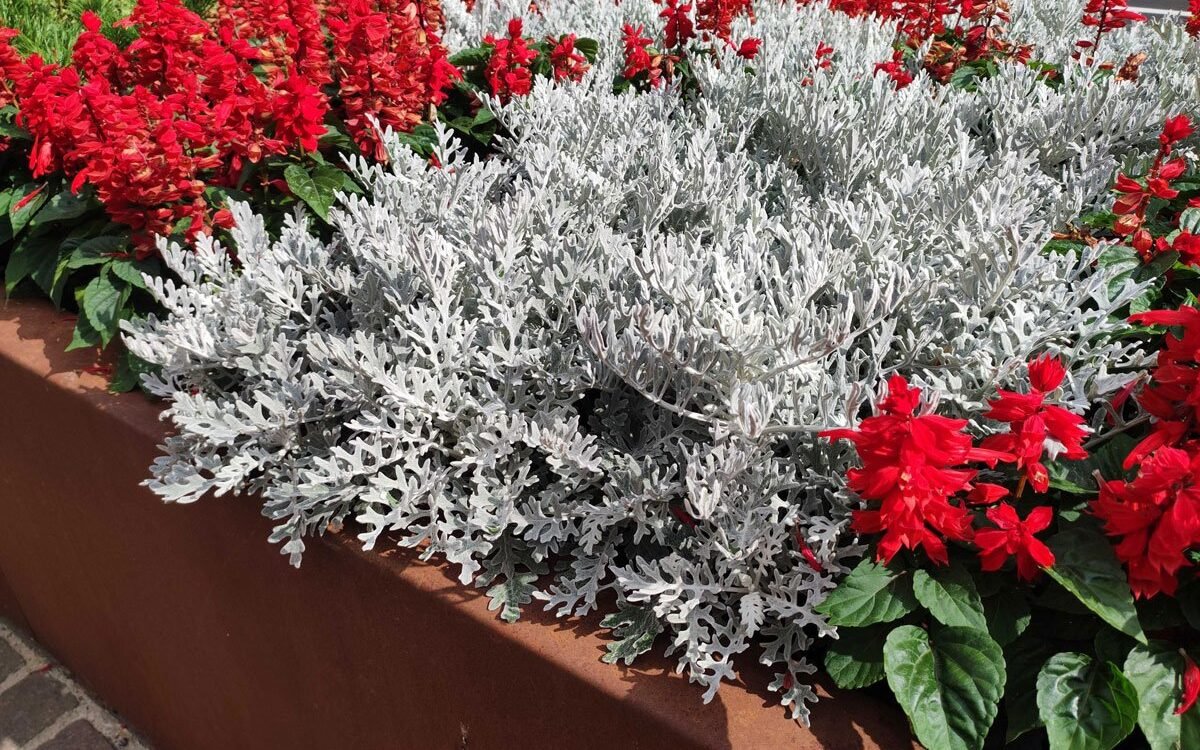
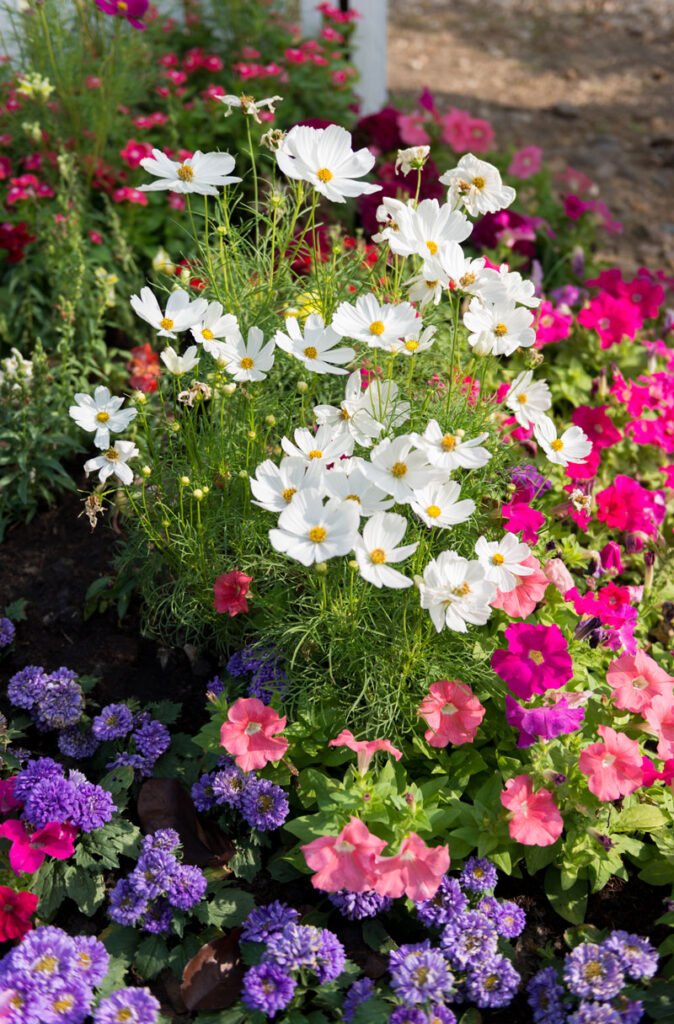
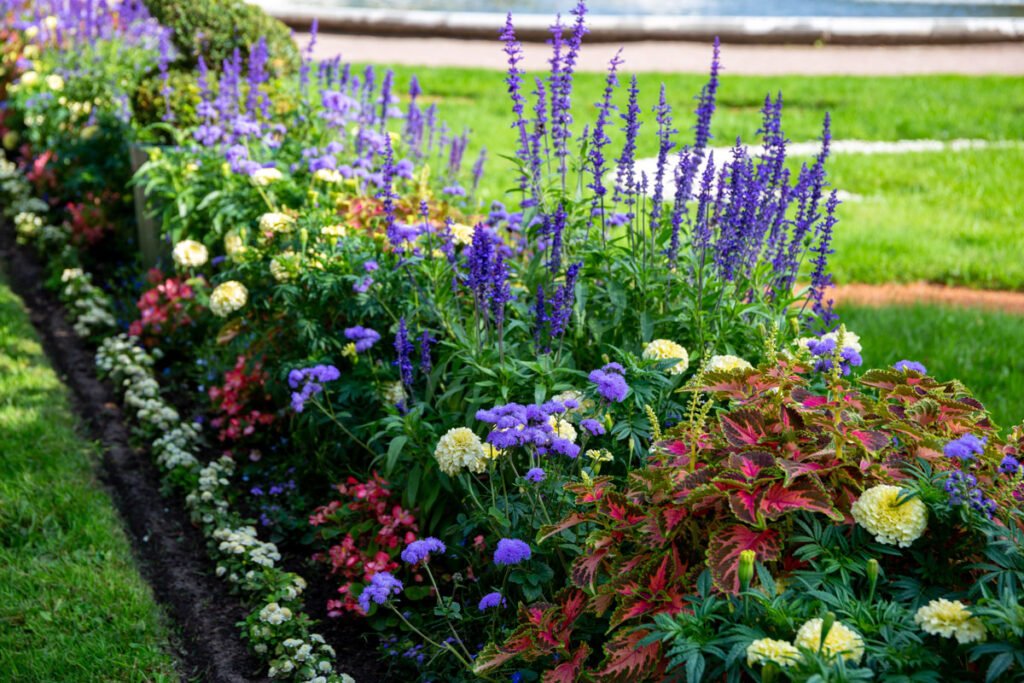
The color combinations can include shades of the same tone or an alternation also choosing among the different available varieties belonging to the same species. It is therefore possible to use plants with inflorescences of different shades of the same colour or with contrasting but visually harmonious nuances such as for example for Salvia farinacea Blu whose spike-shaped inflorescences with characteristic bluish tones combine well with the flowers of different varieties ofBegonia semperflorens, Lobularia maritima and Tagetes patula; we can obtain elegant results by combining plants with coloured or variegated leaves such as the numerous hybrids of Solenostemon coleoides or Coleus blumei. Remarkable scenic effects are obtained with herbaceous plants with dense, single-coloured foliage which will provide a perfect support to highlight the colorful flowers of other ornamentals that will seem to float in the air with a well-balanced overall result as for Ipomea x hybrid whose leaves can act as a frame or background for species such as Impatiens x hybrid New Guinea and Lobularia x hybrid, or Heuchera americana with Cuphea hyssopifolia. The combination of the two is also fascinating. Senecio cineraria Silver with silvery leaves, perfect for highlighting the warm tones or pastel shades of the flowers of the varieties of Begonia x hybrida, Begonia semperflorens, Verbena x hybrid and Zinnia marylandica.
Flowering and seasonality
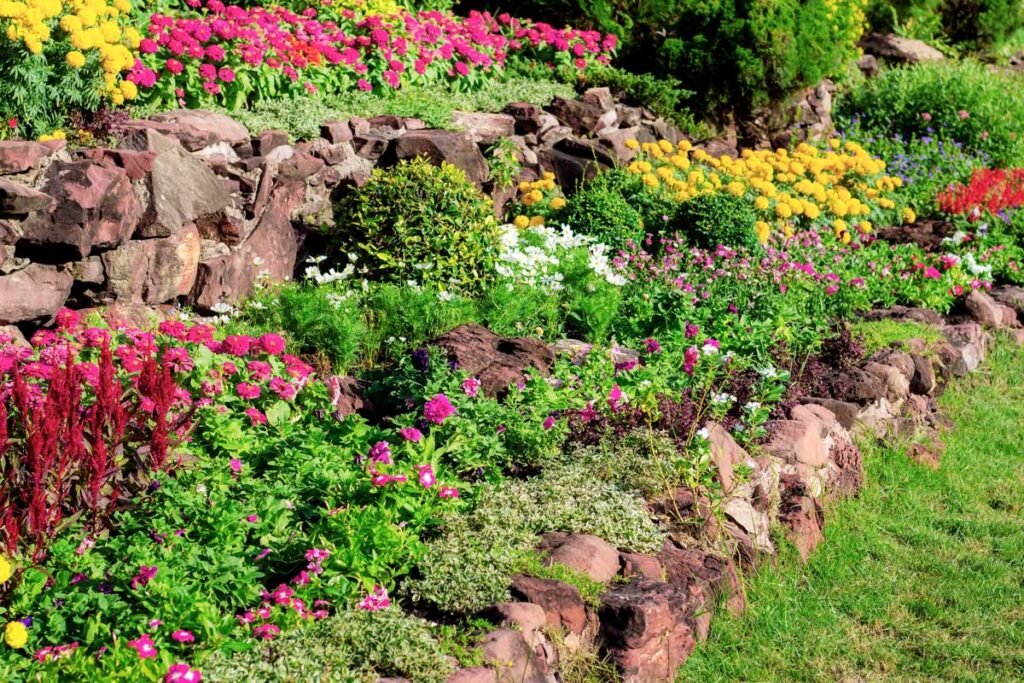
To have continuity and persistence of colors create plant combinations that express a staggered and prolonged flowering over the months; with proper initial planning and a wider choice of species or varieties you can make your plants protagonists for all seasons. Make your flowerbed or border more interesting by combining plants with different flower shapes, for example the sinuous and elegant flower spikes of Lupinus nanus Russel contrast nicely with the compound umbrella-shaped inflorescences of Achillea tomentosa or as Antirrhinum majus whose raceme inflorescences harmonize well with those of Lobelia erinus. Bring life and colour to your green spaces even during the autumn-winter seasons by using plants that express the maximum point of their flowering, early or late, when other ornamentals are fading, adding a bright touch with a warm-toned texture or creating depth and consistency with thin foliage; the light and elegant inflorescences are fascinating, Gaura lindheimeri which like the umbrella-shaped ones of some varieties of Pelargonium x hortorum remain until mid-autumn, or those of Fuchsia x hybrid which give an accent of colour until the end of the autumn period. The shades tending towards amber red to which the leaves turn are also enchanting Bergenia cordifolia during the winter period or the touch of elegance given by the winter blooms of Primula acaulis to be used in composition with Anemone coronaria, Ranunculus asiaticus and Viola cornuta.
Insect friendly
In mixed herbaceous compositions let’s not forget the importance of biodiversity by inserting species defined as “Insect friendly”, having flowers rich in nectar, well-liked by insects useful for pollination such as bees, bumblebees and butterflies. This is the case, for example, of Salvia splendens, to be used in composition with Petunia milliflora, Mecardonia x hybrid and Zinnia marylandica, or Rudbeckia hirta associable to Petunia grandiflora the Lobularia x hybrid.
Perfume
We choose combinations of plants as fragrant as they are colorful following a uniformity of aroma that is pleasant to anyone who approaches. We remain inebriated by the inflorescences in heads of Bidens ferulifolium with a fruity, honey-like aroma, visually enhanced in combination with Calibrachoa the Scaevola aemula.
Also the combinations of ornamental herbaceous plants and shrubs have a significant decorative effect and, if well designed, can create a floating and airy effect to the planting scheme even during the coldest seasons. A further article dedicated to these compositions will soon be available.